Business-in-a-Box for UGC creators

Stop chasing invoices. Stop drafting contracts. Start creating.

A Notion CRM, the automations that fill it, and the contracts that protect the work. Set it up in an afternoon, then let your inbox do the onboarding while you get back to shooting.

One-time purchase · Lifetime updates · Set up in an afternoon

Inbound Pipeline 6 open deals · $5,525 in flight LEAD Kite Labs 3× TikTok · organic $800 Verde Co Photo set · 10 imgs $400 CONTRACT SENT Alta Tea 5× video · paid 30d $1,875 Ridge Fit Unboxing · organic $450 ACTIVE Bloom Co 3× TikTok · paid 90d $1,500 DEPOSIT PAID Nova Skin Testimonial · organic $500 COMPLETED Halden Delivered · paid $2,250 Orso Pet Delivered · paid $1,125 AUTOMATION Form Brand submits nine questions Notion Deal lands in the pipeline Stripe 50% deposit invoice drafted Gmail Contract + pay link sent
90 seconds from brand inquiry to invoice sent
50% of the fee, banked before you shoot
2 revision rounds, capped in writing
0 contracts written from scratch

The admin tax on being a creator

Nobody starts making content because they love invoicing. But the moment brands start replying, you inherit a second job — and it's the one that decides whether you get paid.

  • The inquiry that goes cold

    A brand emails on Tuesday. You reply Friday. By then they've booked someone who answered in an hour. Speed closes deals, and you can't be fast by hand.

  • The invoice you're too polite to chase

    Net 30 becomes net 60 becomes an awkward DM. Without a deposit up front, you're financing the brand's marketing budget for free.

  • The scope that quietly triples

    "Just one more revision." "Can we also run this as an ad?" No contract, no usage terms — so the answer is always yes, and always unpaid.

  • The pipeline that lives in your head

    Three brands in DMs, two in email, one in a note app. You forget a follow-up, miss a deadline, and lose the deal you already earned.

Three pieces. Nothing to learn.

Not a course. Not a PDF of advice. Working infrastructure you clone into your own accounts and switch on.

The Notion CRM

Two linked databases — an Inbound Pipeline for every brand deal and a Content Tracker for every deliverable you owe. Rollups tell you your next real deadline. Filtered views tell you exactly who to chase this morning.

  • Board view: Lead → Contract Sent → Active → Completed
  • Auto-calculated 50% deposit on every deal
  • "Unpaid Deposits" view you empty before you shoot
  • Hook scripts and concept notes attached to each piece

The Automations

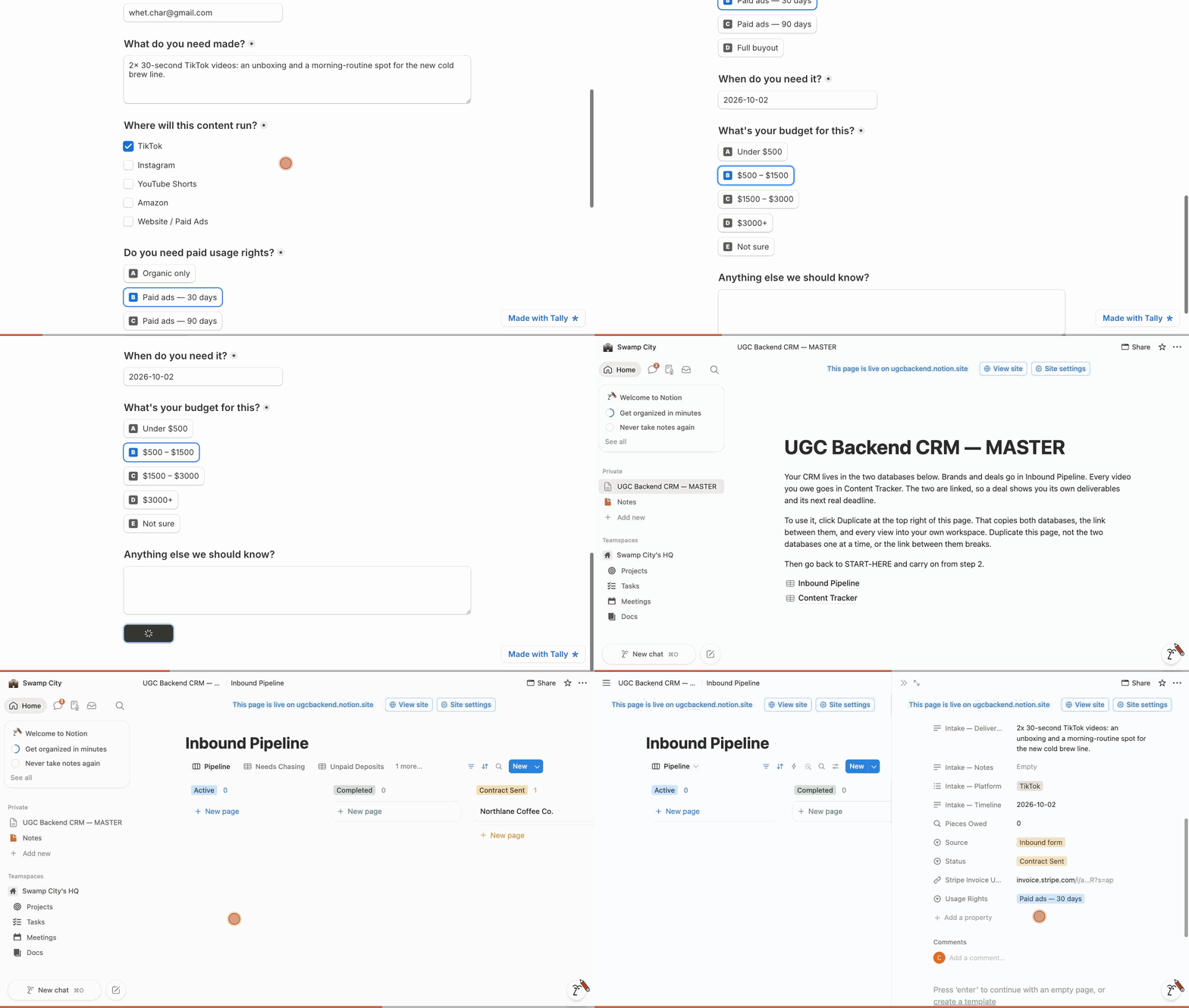
A brand submits your intake form. Before you've read it: the deal is in Notion, a Stripe customer exists, a 50% deposit invoice is drafted, and the brand has an email with the contract and a payment link. You import it as a blueprint — you don't rebuild it.

  • One JSON import — Make rebuilds all six steps for you
  • Form → Notion → Stripe → Gmail, mapped field by field
  • Webhook-triggered, so the reply goes out in seconds
  • ~140 inquiries a month on Make's free plan

The Contract Templates

Plain-English agreements that cover the three things creators get burned on: usage rights, revision caps, and payment terms. Five fields per deal, then send.

  • Standard UGC agreement (organic + paid usage tiers)
  • Revision policy that stops the endless-tweaks spiral
  • 50/50 payment terms with late-fee language
  • Rate card so you stop guessing at your price

What happens when a brand fills out your form

  1. 01

    They submit. You do nothing.

    Nine questions capture scope, platform, usage rights, timeline and budget — the exact fields that decide your rate. The deal lands in your pipeline as a Lead.

  2. 02

    The money moves before you do.

    Stripe creates the customer and drafts a 50% deposit invoice. The pay link gets written straight back onto the Notion card, so it's never buried in your sent folder.

  3. 03

    They get a real reply in 90 seconds.

    Contract link, payment link, and what happens next — sent from your inbox, in your voice. The line that does the work: "your date isn't held until this clears."

  4. 04

    You show up and shoot.

    Deposit paid, contract signed, scope agreed in writing. Open the Shoot Day view on your phone — hook script, concept notes, due date. That's the whole job.

Everything you get

Five documents, one download. Yours forever, updates included.

  • Notion Blueprint — both databases field by field, every view worth building, the nine-question intake spec, and the five-minute morning routine that runs it
  • Three Make blueprints — the six-step intake flow, the payment-confirmation scenario, and deadline reminders. Import, connect your accounts, done
  • UGC contract template — as a ready-to-send PDF and an editable source, plus notes on which brand redlines to push back on
  • Rate card — base rates, the four usage-rights multipliers, add-ons, and three worked quotes
  • 14 email scripts — the auto-reply, the follow-up ladder, the polite decline, the delivery note, and the three overdue chasers

Questions

Do I need to already have clients?

No — but this works best the moment you have one. The system is what turns a first inquiry into a paid, contracted job instead of a three-week email thread. Set it up before you need it, so your first real brand meets a professional.

What does it cost to run?

Notion's free plan runs the CRM indefinitely, and the intake form runs on Tally's free plan, which is unlimited submissions. Make's free plan gives you 1,000 operations a month: the intake flow spends six per inquiry and the payment-confirmation flow another three on each deal that converts, so roughly 140 inquiries a month before you'd need to upgrade. Stripe charges per transaction only: 2.9% + 30¢, plus 0.4% for invoicing, capped at $2. The limit worth knowing is that Make's free plan runs two scenarios at once, which covers intake and payment confirmation; deadline reminders are the third, and that's when Make's $12/month tier starts earning its keep.

How technical is the setup?

Less than it used to be. The CRM is a Notion template you duplicate in one click, and the automations import from a file — you're not building either by hand. What's left is connecting your own Notion, Stripe and Gmail accounts and pasting your details in. No code, no terminal. Budget an hour, most of it authenticating accounts.

Is this just a Notion template?

No. A template is a pretty database. This is the schema plus the automation logic that fills it, the billing flow that gets you paid, and the contracts that protect the work. The Notion piece is one of three.

Can I customize the pricing and contract terms?

All of it. The rate card is a starting reference, not a rule — the multipliers for usage rights matter more than the base numbers. Contracts are plain-text templates you edit freely.

Is the contract legal advice?

No. These are templates built from standard UGC industry practice, not legal advice, and Swamp City LLC is not your attorney. For high-value deals or unusual usage terms, have a lawyer in your jurisdiction review them.
The next inquiry shouldn't cost you an evening.

Set it up this weekend. Never write another "just following up on that invoice" email.

Get the System
$79 one-time
Get the System